


Haining Hongou Textile Co., Ltd. is located in Haining Warp Knitting Industrial Development Zone, Zhejiang, China. We are a company specializing in producing, processing, finishing, and sale of various knitted fabrics. Our core mission is to offer best service for each customer, ensuring the efficient allocation of our company's resources.
Our primary products include various types of advertising flag and banner fabrics, sofa fabrics, and footwear materials. Our range of products includes super soft Velboa, suede fabric, Tricot fabric, crushed velvet, mesh fabric, laminated fabrics, printed fabrics, and hot stamped fabrics, with excellent quality and competitive pricing.
Type of Spandex Fabric


Why Choose Us?
Variety Of Products
Our company offers a wide range of products, can offer a wide variety of products or services to their customers. This provides more options to choose from and can improve customer satisfaction.
Reliable Quality
Our company have quality assurance mechanisms in place to ensure that their products meet certain standards. This can provide customers with confidence that they are getting a reliable product.
Competitive Pricing
We offer competitive pricing without compromising on quality, making our products accessible to a wide range of customers.
Customer Service
Our team is highly responsive and always available to assist our customers with any questions or concerns.
What is Spandex Fabric?
Spandex fabric, also known as elastane or lycra, is a synthetic fiber known for its high elasticity and stretchability. It is composed primarily of polyurethane and was invented by the dupont company in 1959. Spandex fabric is often used in the production of clothing that requires a great amount of stretch and recovery, such as sportswear, underwear, swimsuits, and dancewear. Spandex fabric is a synthetic fabric that is prized for its elasticity. One of the key characteristics of spandex fabric is its ability to stretch significantly without losing its shape or elasticity. This makes it an excellent choice for clothing that needs to conform closely to the body while still allowing for freedom of movement. Additionally, spandex fabric is generally lightweight and comfortable, making it a popular choice for athletic and casual wear.
Advantages of Spandex Fabric
Spandex fabric offers a myriad of advantages that have contributed to its widespread adoption across various industries. Let's take a closer look at the key benefits:
Extraordinary Stretchability And Elasticity
One of the most notable advantages of spandex fabric is its remarkable stretch and elasticity. This synthetic fiber can expand to several times its original length without losing its shape, allowing for comfortable movement and flexibility in garments. Whether it's a form-fitting swimsuit or a snug athletic outfit, spandex fabric ensures an optimal fit.
Superior Comfort And Freedom Of Movement
Thanks to its stretch properties, spandex fabric provides excellent comfort and freedom of movement. It molds to the body, offering a second-skin sensation and allowing individuals to engage in various physical activities without restriction. From yoga and dancing to sports and leisurewear, spandex fabric enhances comfort and performance.
Enhanced Durability And Shape Retention
Spandex fabric boasts remarkable durability and shapes retention capabilities. It can withstand frequent stretching and returns to its original form after each use, making it ideal for garments that require resilience. Additionally, spandex fabric resists wrinkling, shrinking, and fading, ensuring that the clothing maintains its appearance even after prolonged use.
Moisture-wicking And Breathable Properties
Another advantage of spandex fabric is its ability to wick away moisture and promote breathability. The synthetic fibers allow air circulation, keeping the body cool and dry during physical activities. This feature is particularly valuable in sportswear and activewear, where sweat absorption and quick drying are essential for comfort.
Versatile Applications In Various Industries
Spandex fabric finds wide-ranging applications across multiple industries. Its stretch and recovery properties make it ideal for apparel manufacturing, including swimwear, athletic wear, lingerie, and hosiery. Additionally, spandex fabric is often blended with other materials like cotton, polyester, and nylon to enhance their stretchability and comfort.
Resistance To Wrinkles And Creases
Due to its synthetic nature, spandex fabric exhibits resistance to wrinkles and creases. This advantage makes it a popular choice for travel-friendly clothing, as it can be packed without the worry of unsightly folds. Whether you're going on a business trip or vacation, spandex-infused garments can help you maintain a polished appearance.
What Is Spandex Fabric Commonly Used For?
The use of artificial fibers for making all types of garments is increasing at an alarming rate with every passing day. The upgrades which are made to these kinds of artificial fibers make them appear more evolved and molded into a shape that suits every aspect and occasion. Such fabrics come with many advantages for the user, which are obviously the better versions than the previous ones. Spandex fabrics are one of the best examples of this, which has evolved as a major fabric to be used in almost all kinds of garments and suitable for different occasions.
To say about spandex fabric, it is one of the most lightweight and highly flexible, and adjustable fabrics currently available and popular in the market. Spandex fabric has some of its properties similar to elastic, which makes it appear more flexible and firm at the same time. It is also smooth and provides an extreme level of comfort and convenience of movement to the user who is wearing the cloth made of spandex fabric. Spandex is developed as a fabric that possesses a very good level of stretchability, which later became a trendsetter in the entire garment industry.
Usage Of Spandex In Medical Field
Spandex fabric, even though is a regularly used material in the medical field, it has been unusually used for certain things too. Some of them include the braces for knee and back support, made of spandex fabric, especially for its ability to compress and it' s firmness in providing support. Even the elastic bandages which are used for treatment of wounds and minor injuries are made of spandex fabric due to its stretchability. Most of the compression garments too are made of spandex fabric which are medically effective in nature. Other than these, many of the adult and children diapers are made of spandex fabric, which can also be considered as an unusual way to utilize the fabric.
Usage Of Spandex In Sports
Sports is another field which has a lot of applications made of spandex fabric but at the same time they have some unusual ways of using the fabric too. Many of the volleyballs and even the footballs are made of spandex fabric. Previously, only the body wear of sportsmen were made of spandex fabric.
Usage Of Spandex In Automobiles
Automobiles are indeed a surprise choice when it comes to one of the unusual applications of spandex fabric. Some of the major automobile companies use spandex fabric for their car seats and covering cushions for its shiny and glossy surface with the firm and smooth finish. There are more applications for the spandex fabric in the automobile industry like the door panel fabrics which need to be stretchable and stick to the surface of the door.
Usage Of Spandex In Footwear
Spandex fabric usually fits in pretty well and the smoothness and firmness of the fabric makes it an ideal choice for footwear. Therefore spandex fabric are also found in the footwear which makes it slag free for a longer period of time, making it another unusual application of the spandex fabric.
Usage Of Spandex In Household
From interior designing to a variety of purposes, the spandex fabric has a higher utility rate in the households. As most of its applications are clearly unusual, including the ones applied in the sheets and for the bead pillows. It is also used as coverings for the table which are smooth and wonderful surfaces for a long term use.
Maintenance of Spandex Fabric


Understand The Material Of Fabric
Different spandex fabrics have different cleaning requirements. For example, cotton fabrics are generally more washable, while silk or synthetic fabrics may require special cleaning methods.
Vacuum Regularly
Use a soft-bristled vacuum cleaner to regularly clean the surface of the spandex fabric to remove dust and small particles that accumulate daily.
Treat Stains
● For small, fresh stains, you can use a clean cloth or sponge dipped in a small amount of warm water or neutral detergent and gently wipe the stained area. Avoid using too much water as it can penetrate inside the sofa.
● For stubborn stains, you may need to use a specialized sofa cleaner. When choosing a cleaner, make sure it is compatible with the material your spandex fabric is made of.
● For oil or food stains, you can use mild soapy water or alcohol to clean. But be sure to test a small area on an inconspicuous part of the sofa first to make sure you won't cause damage to the spandex fabric.
Avoid Using Harmful Chemicals
Avoid using bleach, harsh cleaners or solvents as they may damage or discolor the spandex fabric.
Dry Naturally
After cleaning, let the spandex fabric dry naturally and avoid using hot air to dry or expose it to the sun to prevent the fabric from deforming or fading.
Spandex can be either 2 way stretch, meaning it will stretch along either the length or width, or 4 way stretch, meaning it will stretch along both the length and the width.
Pedantic Note: "Warp" and "weft" are how many people refer to a fabric's length and width, but those are actually terms for woven fabrics! Spandex is a knit fabric.
4 way stretch tends to be a higher quality than 2 way stretch and is much more desirable to use in your projects.
4 way provides a much more comfortable fit, is less prone to ripped seams (assuming proper sewing technique!), and is definitely worth paying the extra money for.
2 way stretch fabric sometimes has a tendency to fray or pull, and is sometimes more sheer than the 4 way stretch.
4 way stretch fabric makes a more durable, comfortable garment base. I wouldn't recommend using 2 way stretch fabrics for anything but applique designs.
Most performance costuming patterns - figure skating dresses, bodysuits, swimsuits, leotards, tights, etc - are designed under the assumption that you will be using 4 way stretch fabric.
Using a 2 way stretch spandex on a pattern designed for 4 way stretch won't fit right, won't move with the body the way the pattern intended, and won't be as durable, as a result.
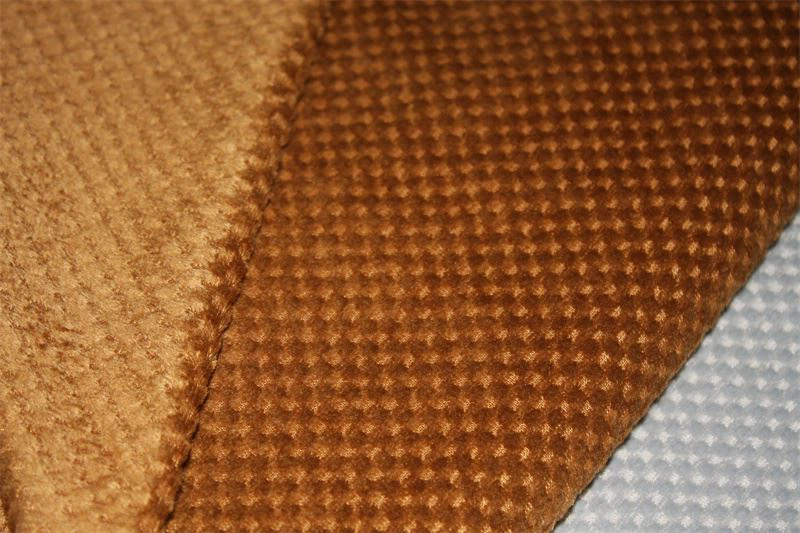
What's the Difference Between Lightweight, Mediumweight, And Heavyweight Spandex Fabrics?
The main difference between lightweight, medium-weight, and heavyweight spandex fabrics is their thickness and durability.
● Lightweight spandex is thin and sheer, making it suitable for sheer garments or as an accent fabric.
● Medium-weight spandex has more body and is commonly used in activewear and swimwear.
● Heavyweight spandex is thick and durable, making it ideal for dancewear, costumes, or structured garments that require more support.
The weight of the spandex fabric affects its stretch, opacity, and durability, so choose the appropriate weight based on your project's requirements.
What Are Some Factors That Can Affect the Lifespan of a Spandex Fabric?
Fibre Quality
The quality of the fibre used in Spandex Fabric affects their durability. Fibres that are strong, resilient, and resistant to abrasion tend to have a longer lifespan.
Use And Care
How the Spandex Fabric is used and cared for can also affect its lifespan. Heavy use, exposure to harsh chemicals, and improper cleaning can all contribute to premature wear and tear.
Environmental Conditions
Spandex Fabric can be affected by environmental conditions such as temperature, humidity, and sunlight. Extreme conditions can cause fading, shrinkage, or degradation of the fabric.
Materials of Metric Roller Chain SprocketHow Is Spandex Fabric Made?
Since spandex is a fully synthetic fiber, no organic components are used to make this material. Instead, all of the constituent parts of this fiber are made in a laboratory setting, and they are then combined under specific stimuli to create spandex fabric.
In the years since the invention of elastane, a number of different methods for making this fabric have emerged. Some of these methods are more efficient than others, and, over time, methods like reaction spinning, melt extrusion, and solution wet spinning have mostly been discarded. Nearly 95 percent of the world's spandex is now made with a method called solution dry spinning, and it is this manufacturing process that we will examine in detail.
To begin the spandex fabric production process, a substance called macroglycol is mixed with a diisocyanate monomer under specific heat and pressure. The temperature and pressure conditions must be exact to produce the desired results, and the macroglycol and diisocyanate monomer must also be in a ratio approximate to 1:2.
If the right conditions are applied, a substance called a prepolymer is formed, and this substance is then used in the remainder of the production process. Once it has formed, the prepolymer is exposed to diamine acid, and a chemical reaction called chain extrusion reaction is initiated.
The resulting substance is highly viscous, and it must be diluted with a solvent before it can move on to the next step. When it is thin enough to work with, the prepolymer is loaded into a machine called a fiber production cell or a cylindrical spinning cell.
Inside this machine is a device called a spinneret, which has dozens of tiny holes. As the fiber production cell spins, the prepolymer solution is forced through these holes, and it takes on the form of strands of fabric. These strands, however, are still in a liquid state when they emerge from the spinneret, and they are then exposed to heated solvent gas and nitrogen to render them into a solid state.
These solid fibers are then pushed out of the cylindrical spinning cell, and when they are exposed to pressurized air, they form into twisted strands. This compressed air can form strands of many different sizes.
Lastly, the spandex fiber is immersed in a finishing agent consisting of magnesium stearate or a similar chemical. Once it is loaded onto a spool, it is ready to be woven into fabric.
Our Factory
Our company possess a variety of German Karl Mayer warp knitting machines and related equipment, as well as various types of circular knitting machines, sewing machines, lamination, printing, and foil stamping machinery. Each production stage is supported by specialized technical research and development teams responsible for product development and technical support.
Our primary products include various types of advertising flag and banner fabrics, sofa fabrics, and footwear materials. Our range of products includes super soft Velboa, suede fabric, Tricot fabric, crushed velvet, mesh fabric, laminated fabrics, printed fabrics, and hot stamped fabrics, with excellent quality and competitive pricing. They are exported both domestically and internationally, earning praise from a wide array of domestic and foreign clients.

Ultimate FAQ Guide to Spandex Fabric
Q: What is spandex fabric?
Q: How to maintain spandex fabric?
Q: How to choose spandex fabric?
Q: What you should know when use spandex fabric?
Q: What is the recommended temperature for washing spandex fabric?
Q: How can I care for spandex fabric to maintain its elasticity?
Q: What are some common mistakes when sewing with spandex fabric?
Q: Can I tumble dry spandex fabric?
Q: What's the best way to store spandex fabric to maintain its elasticity?
Q: What are the different types of spandex fabrics and which one is best for sewing?
Q: How can I clean stains on spandex fabric?
Q: How can I prevent stains from forming on spandex fabric?
Q: What detergents are suitable for cleaning spandex fabric?
Q: Can I machine wash spandex fabric?
Q: Can spandex fabric be ironed?
Q: What's the best way to clean spandex fabric stains?
Q: What detergents are suitable for cleaning spandex fabric?
Q: What are the processing techniques for spandex fabric?
Q: Do you know the material of spandex fabric?
Q: What determines the elasticity of spandex fabric?
We're professional spandex fabric manufacturers and suppliers in China, specialized in providing high quality custom service. We warmly welcome you to wholesale high-end spandex fabric made in China here from our factory.
Pure Plush Fabric, Mesh Cloth Material, Teddy Plush Fabric